
We have been so focused on our home renovation and preparing our garden for the 2023 season, it felt like it had been forever and a day since we took even a weekend for ourselves. We decided to go to Perugia, the capital of the region Umbria in central Italy. Besides the Etruscan and Roman history and medieval and Renaissance architecture, Perugia is also famous for Perugina chocolate which some of you may know from their Baci (meaning kisses in Italian) chocolates with the hazelnut on top. We booked a tour at Perugina’s Casa del Cioccolato to learn about their history, see the factory, visit the museum with all their designs and packaging from the last 100 years, and of course, do numerous tastings. They also have a chocolate cooking school, but we did not attend any classes.

The Baci chocolate was first created in 1922 and was the brainchild of Luisa Spagnoli, one of the original founders who wanted to use leftover ground up hazelnuts from another product to form a new confection. She, along with Giovanni Buitoni (who you may recognize from the famous Buitoni pasta brand), another founder, were in love and they used to exchange love notes inside of the chocolate wrappers. To underscore the idea of the chocolate kiss, the company’s marketing department started to put love notes inside of the chocolate wrappers for customers, which they still do today.
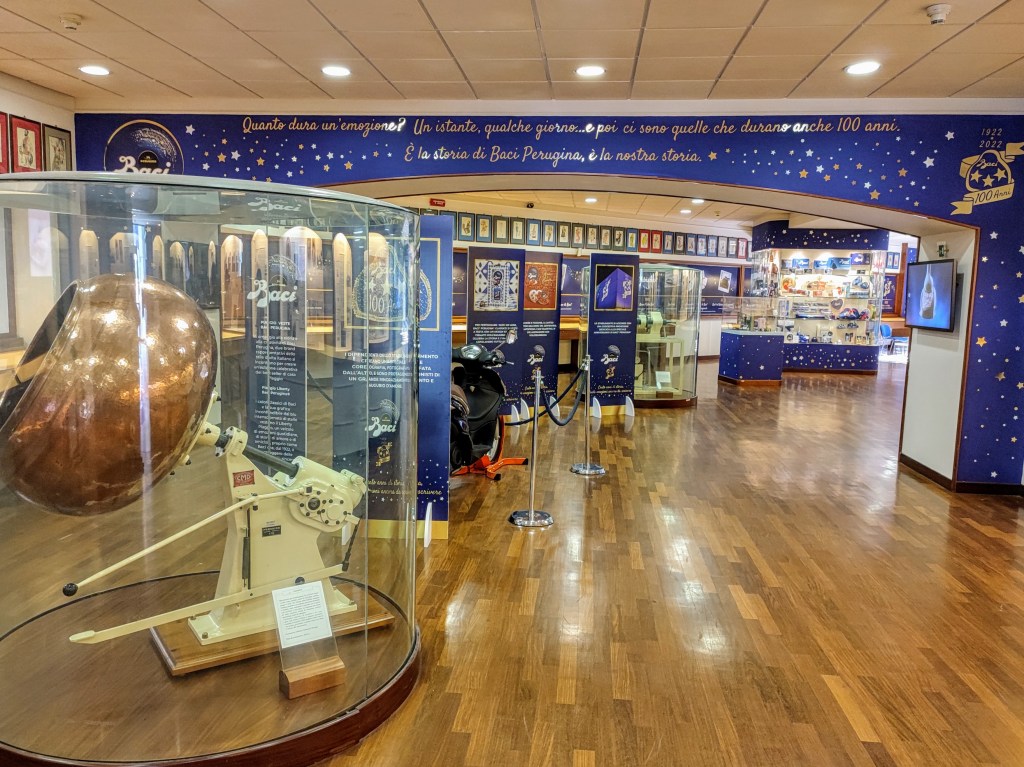
In 1988, Perugina Chocolate allowed Nestlé to buy their company because they had the technical know-how for greater production and world-wide distribution. As part of the purchasing agreement, the original Perugina recipes remain the same, but the factory now also produces other chocolates for the Nestlé brand such as Kit Kat.
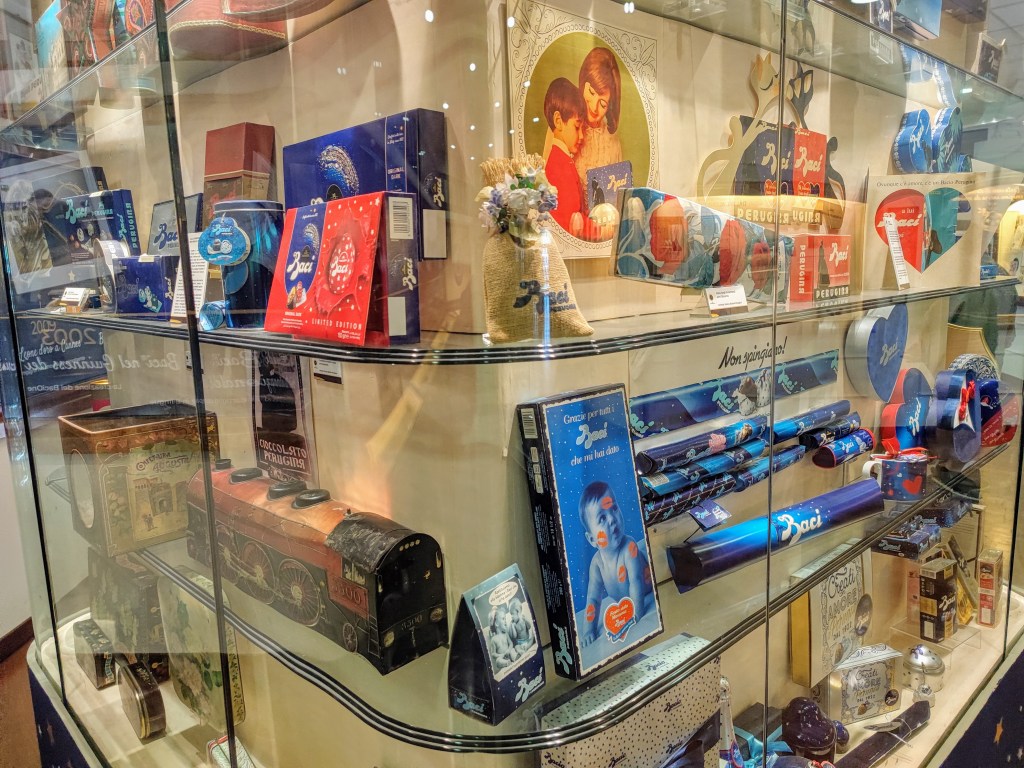
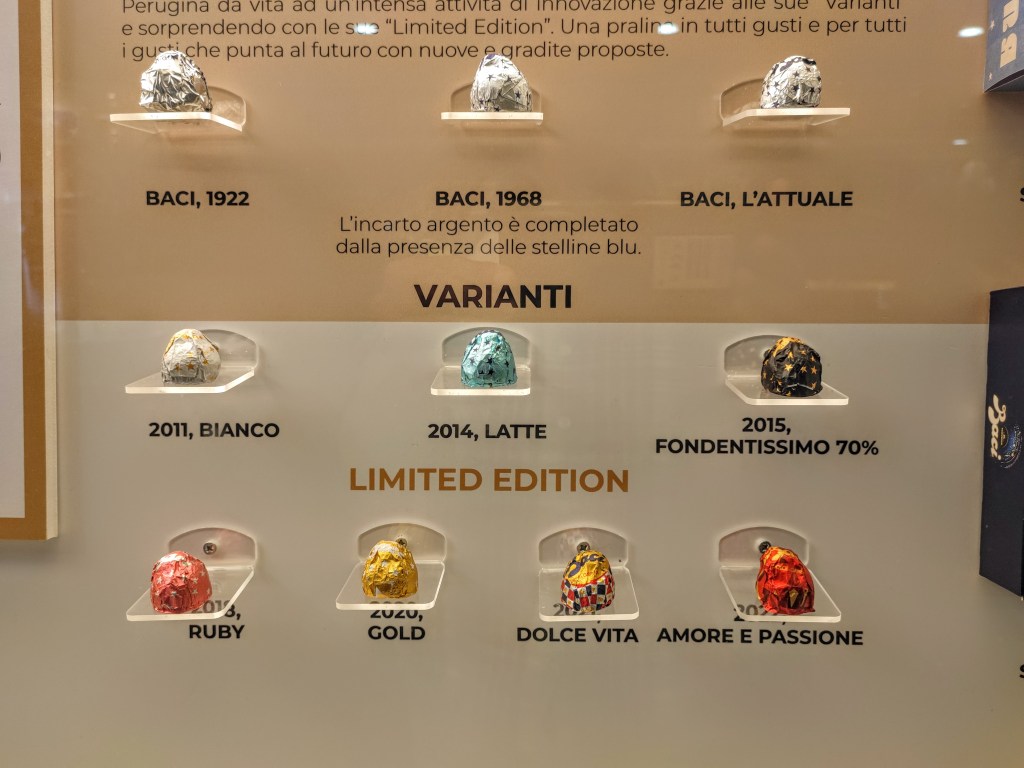
In the end, do I recommend taking a tour of the Perugina Chocolate Factory if you happen to be in Umbria? The history and the museum were interesting, and of course all the samples were delicious, but the tour of the factory itself was a bit disappointing. It sure smelled great, though! For the factory tour, they make participants walk along a glassed-in catwalk over the factory and photos or videos were not allowed, understandably. Some of the conveyor belts, cooling equipment, chocolate coating apparatus, are lightening fast and it reminded me of an old I Love Lucy episode where Lucy and Ethel were trying to keep up with the pace of packaging chocolates. But you can’t see the factory in detail, there was no time for questions, and it felt a bit rushed. So go if you are truly interested and want to see it for yourself. Otherwise buy yourself a box or bag of Baci chocolates and take your time reading and enjoying their website, instead. In the meantime, enjoy some chocolate-based recipes courtesy of their site: https://www.perugina.com/it/ricette
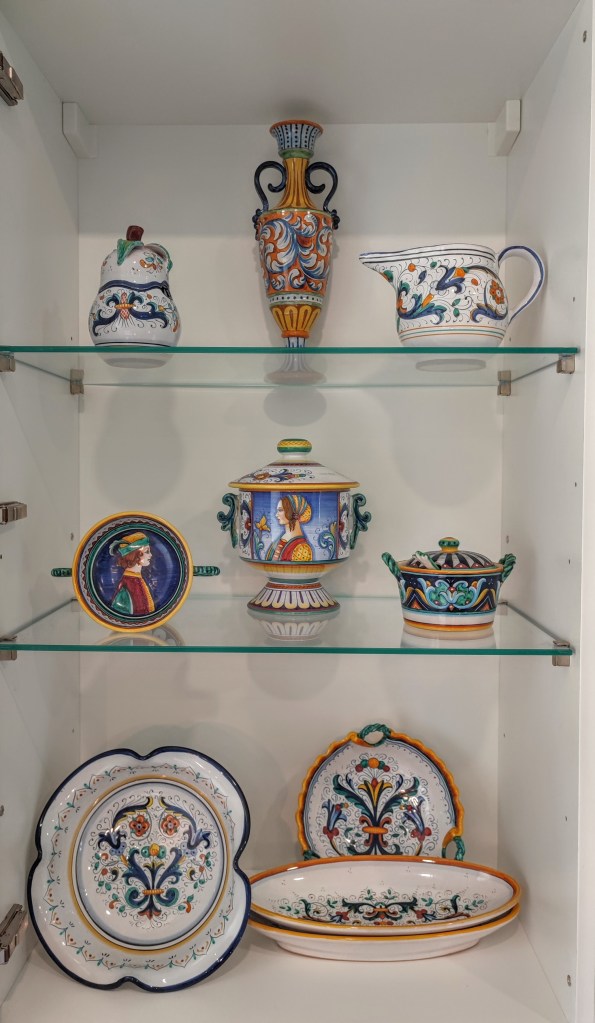
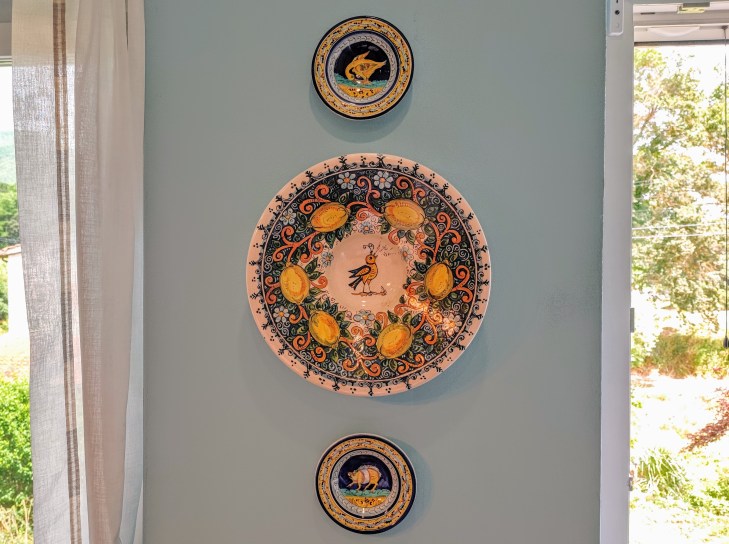
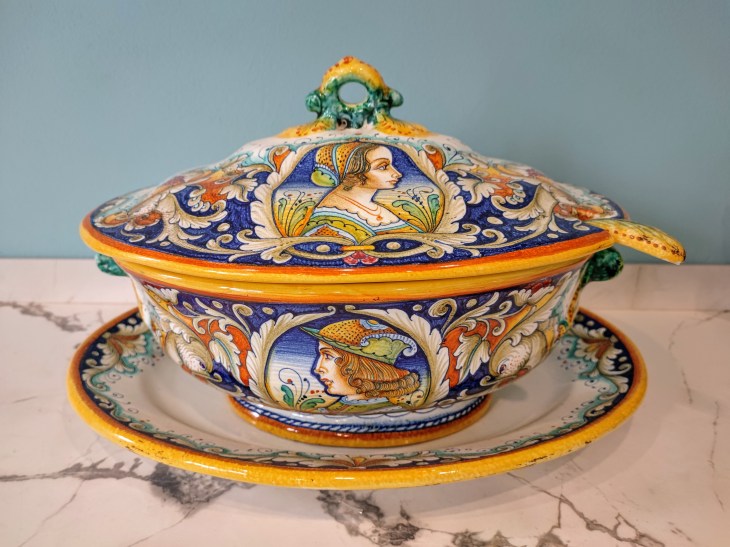
Another reason we chose to go to Perugia and the surrounding area was to visit Deruta, a little town about 20 minutes from the capital. Since earlier than the Renaissance, Deruta has been, and still is, famous for their pottery known as majolica. Many of their ceremonial plates and vases may be found in museums throughout the world. I have been collecting pieces for decades including plates, cups, saucers, vases, serving platters, wall art, a soup tureen, and even a clock.

My first attempt to go to Deruta was in the late 1990s. I traveled from Florence to Perugia via train and a woman sitting next to me asked, “Why do you want to go to Deruta?!” which later became a joke. Although she was from the region, and Italian, she did not know about the pottery. That trip was a failure because at that time there were no available taxis from the Perugia train station to Deruta so there was no way for me to get there. Other than enjoying some Baci chocolates, I went back to Florence frustrated and empty handed. During the next trip, I rented a car and was successful. The irony is that I had several fragile pieces (including a large soup terrine) shipped to me in Washington, D.C., where I lived at the time, which were then packed and moved to San Francisco where I lived for 16 years. They have come full circle and are back in Italy where I now reside. Their value has gone up, if only for the shipping cost!

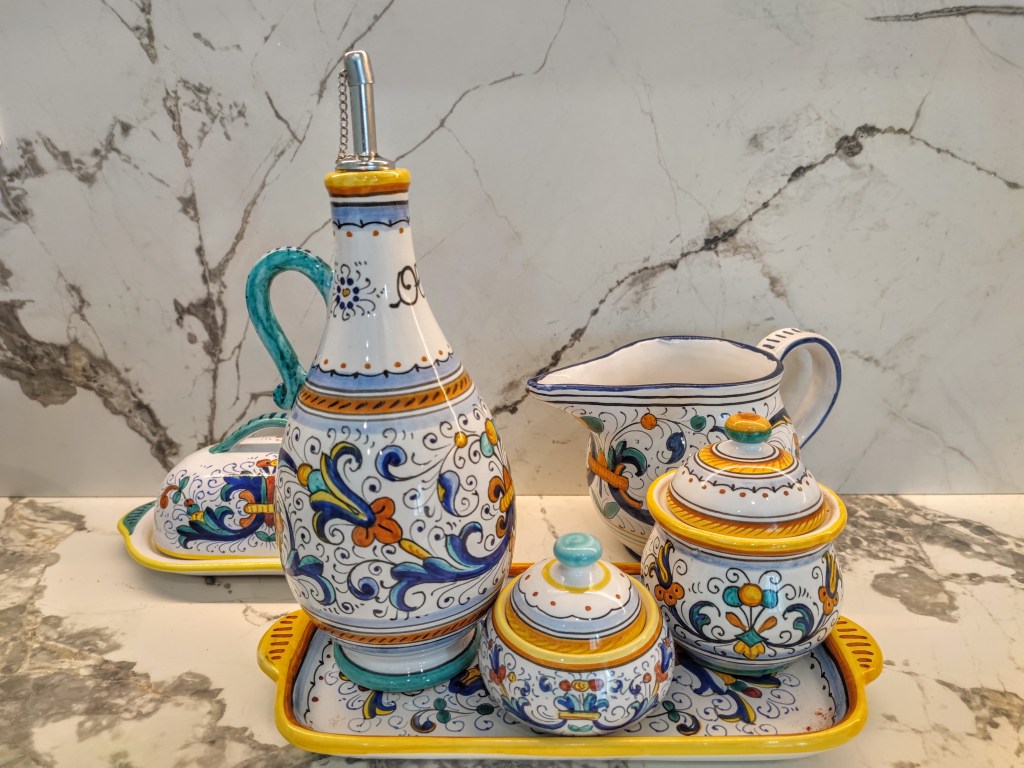
My visit to Deruta last weekend was high on my mind because I had several “needs” for our house, and it had been a good 20 years since my last visit. What I found was a little depressing. More than half of the shops were closed even though it was a Saturday at the beginning of high season, as was the Deruta Museum, per order of their mayor, for some unknown reason. (The museum website says they are open from June – September, so hopefully they are just slow to start this year). Perhaps we should have visited on, say, a Thursday, instead? “Boh!” (Italian for “I don’t know!”)
We stopped in for coffee at a nearby bar and the manager, Michela, an expat from Romania who has been living in Italy for nearly 20 years, warmly welcomed us and explained that some of the shops were closed because of COVID-related deaths and that those who have shops at their home no longer feel like opening on the weekend. She also explained that the craft seems to be dying out and the younger generations are leaving the town and the country for better opportunities. We learned that this is somewhat, but not completely accurate.
We spoke at length with Rolando Nulli, a ceramicist, who said that 90% of his business is now online, and his customer base is mostly Americans who still have “Deruta fever,” a love of collecting Deruta majolica. Speaking with another ceramicist, we were told that she exports most of her pieces to various shops in the US, where the stores charge 4 times the price (I believe it based on my experience at Biordi Art Imports in San Francisco!). At least in Deruta we were able to buy a ceramic bottle for olive oil that we had been searching for our dining room table as well as a special little container for our peperoncino (ground red pepper) that we put on many savory foods).
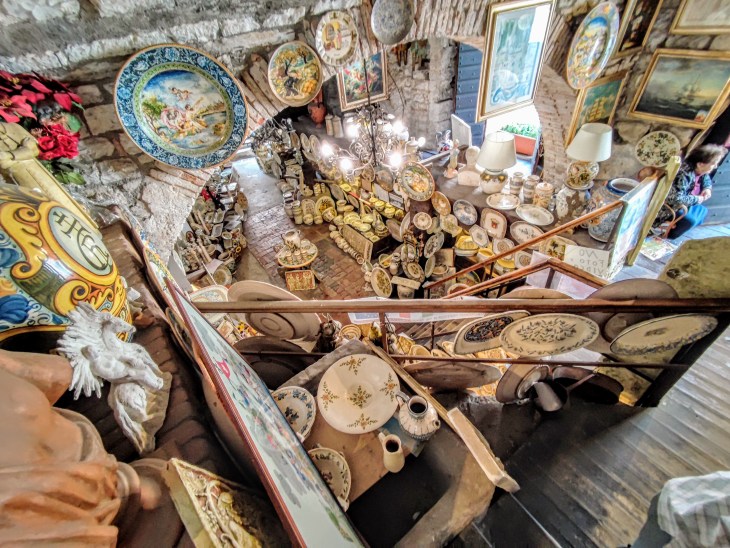
Gubbio is another medieval town about an hour away from Perugia and happened to be more or less on our way home. They are also known for pottery, although not as famous as Deruta, and they have different patterns and color palettes. There we met Leo Grilli, now 86 years old, a ceramicist since 1959, and his daughter, Claudia, who learned the craft from her father. Leo was selected to teach pottery at the University of Pennsylvania where he taught for nearly 10 years in the 1980’s before returning to Gubbio. It was lovely to chat with them both and to learn about what makes their pottery so unique. He is clearly very proud of his body of work and how he has passed the craft on to his daughter while keeping the forms, designs, and art alive for another generation.
Much like Perugina Chocolates selling to Nestlé for modernization and distribution, perhaps all is not lost with Italian ceramics, keeping the original centuries old patterns, colors and designs, but shifting to the digital world for sales for survival — and our home is more beautiful thanks to all the dedicated families of artisans.
___________________________
Did you enjoy reading this post? If so, please consider giving it a “like” or a comment. It would be nice to know you are out there and that my posts connect with you.

 Greg Nelson Cooks
Now I know where you got all your beautiful ceramic serving pieces!
LikeLiked by 1 person