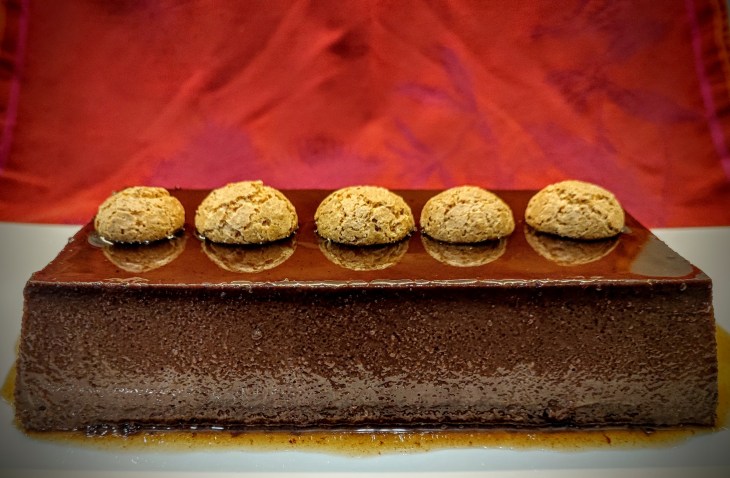
One reason I enjoy writing and sharing recipes is that it keeps me in a continuous state of learning about techniques, ingredients, as well as cultures and traditions. Today’s recipe brings us to the Piedmont region of Italy (the very northwest part of the boot) to discover the dessert Bonet. Bonet? Like bonnet, a hat? Sort of. Dessert caps off a meal, but in this case, it means a specific kind of creamy dessert.


What is the difference between a pudding, flan, budino, bonet, anyway? Depending on where you’re from, they can all be synonymous – well, more or less. To summarize, while budino and flan can be similar in texture, a bonet is a specific type of budino with unique flavors and added crushed cookies. In England, “pudding” is a broader category encompassing various dessert types, but in the US, a pudding is equal to a budino except made on the stovetop without the need for a water bath. This could go in circles. If you’re interested, specifically:

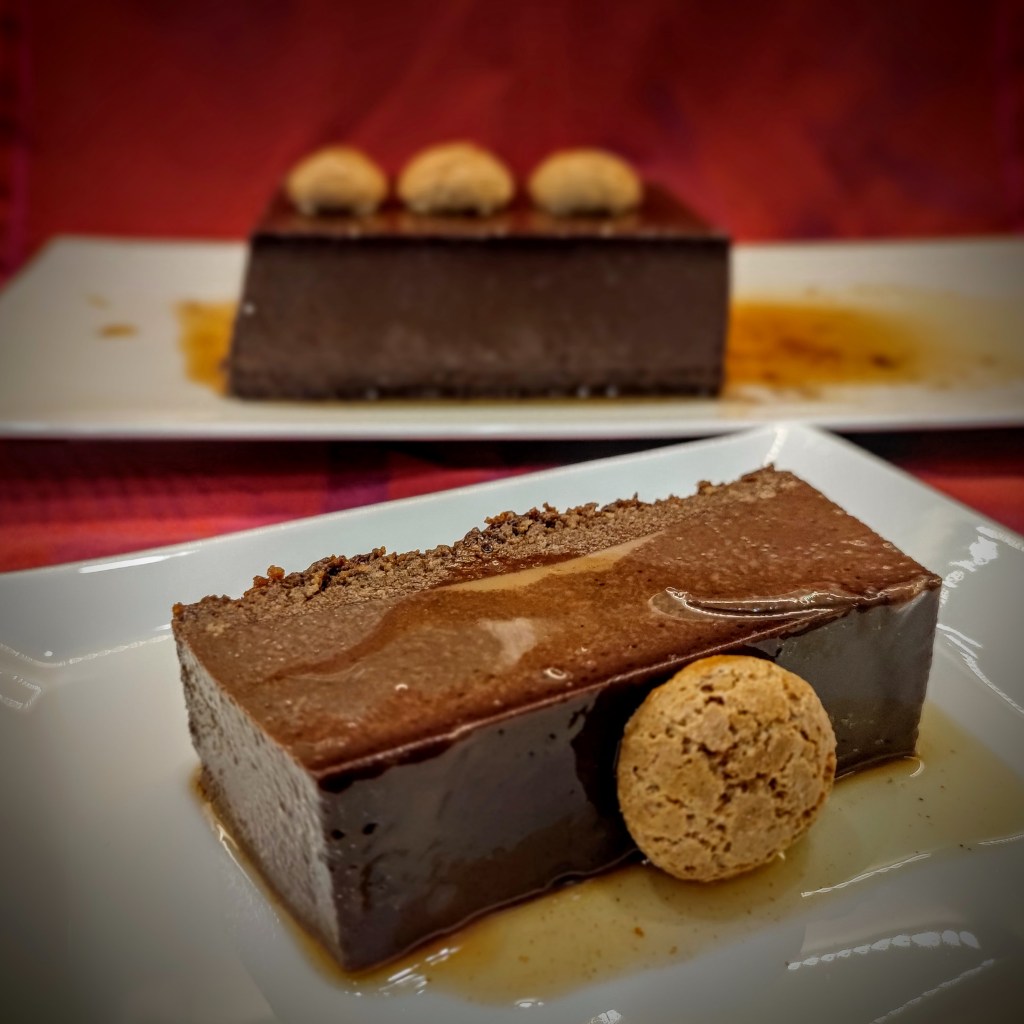
Bonet: This is a traditional Piedmontese dessert, a type of chocolate budino with a unique twist. It’s made with amaretti cookies, cocoa, and sometimes rum or other liqueurs, giving it a rich and complex flavor. If made in cups, tipped out and upside down it looks like a bonnet. Today’s recipe will be made in a loaf pan.
Budino: This is a general Italian term for a creamy dessert, often baked in a water bath.
Flan: This term has different meanings depending on the country. In Italy, a flan refers to a savory dish cooked in a mold, often made with vegetables or meat. In other countries, it’s associated with a creamy dessert like crème caramel, with a caramelized top.
Pudding: This is a broad term used in English-speaking countries for various desserts. It can refer to creamy custards, steamed puddings like bread and butter pudding, or even rice pudding.
___________________________
Did you enjoy reading or making the recipe from this post? If so, please consider giving it a “like” or a comment. It would be nice to know you are out there and that my posts connect with you.
A Piedmont Bonet
Ingredients
- 7 oz (200 grams) Amaretti cookies
- 6 tablespoons (42 grams) unsweetened cocoa powder
- 4 whole large eggs + 1 egg yolk
- 2 cups (500 ml) whole milk
- 1 + 1/2 cup (300 grams) regular granulated sugar, DIVIDED
- 1/8 teaspoon kosher or sea salt
- 2 tablespoons amaretto or rum (If you don’t want to use alcohol, you can use the same amount of cold coffee, or 1 teaspoon vanilla extract)
Directions
- Pre-heat the oven to 325 F (160C) with the oven rack in the center
- Pulverize all the amaretti cookies (except for 6 cookies, reserved for decoration at the end) using a food processor, or in a bag with a rolling pin or bottom of a pan. Set the fine crumbs aside
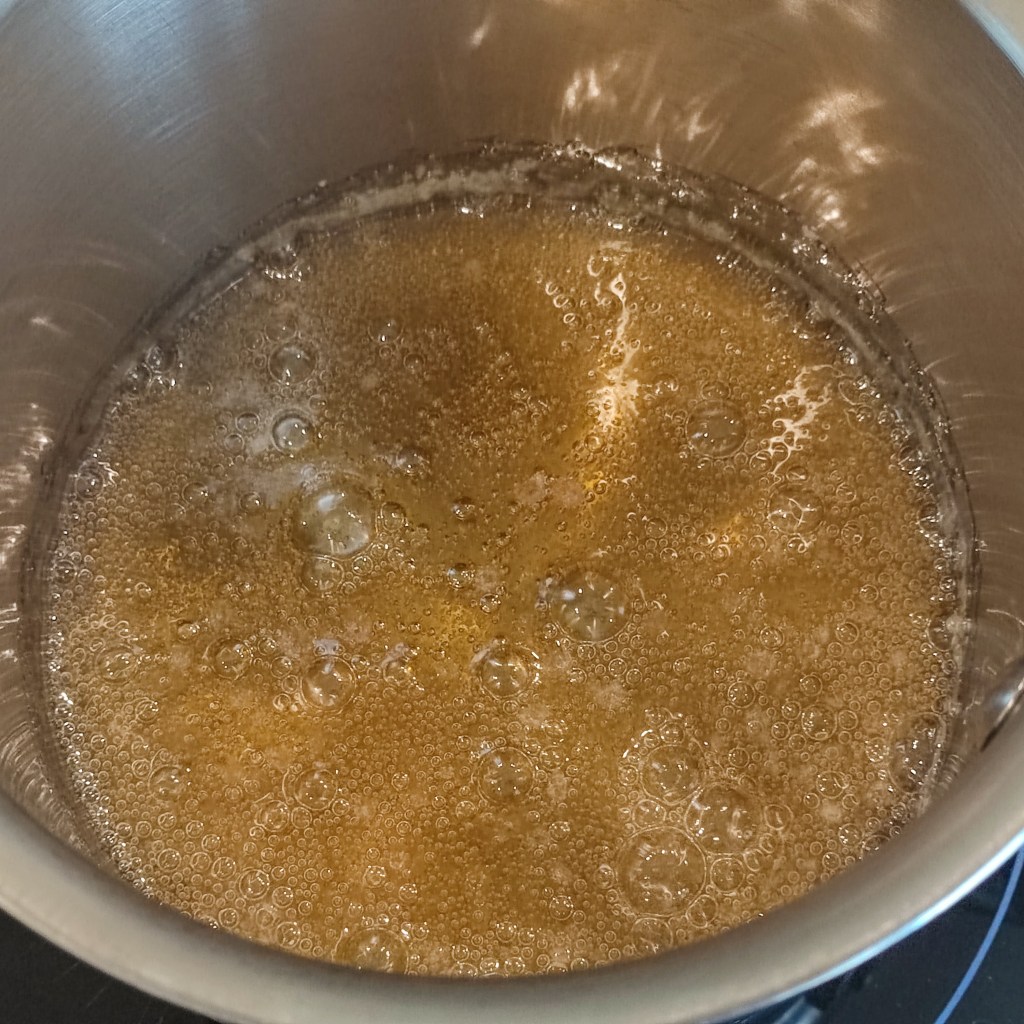
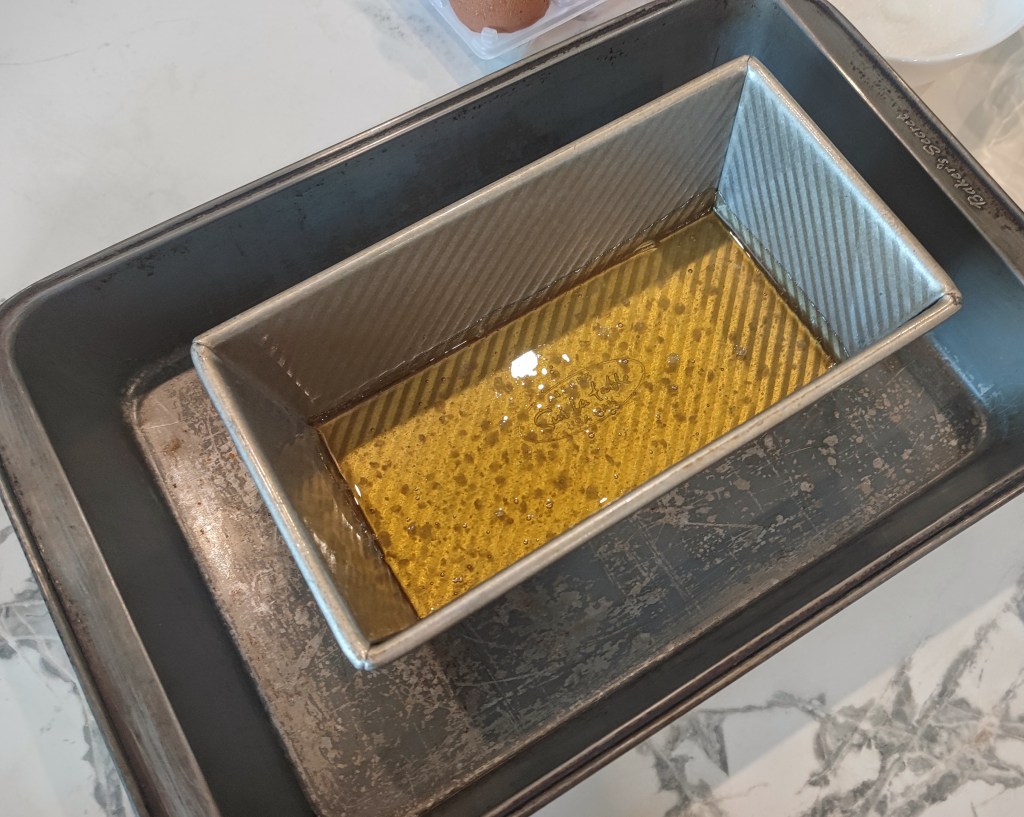
- In a small saucepan, combine 3 tablespoons (50 ml) of water and 3/4 cup (150 grams) of granulated sugar. Gently stir to moisten as much of the sugar as possible. Turn on the heat to medium-low and bring the sugar to a boil without stirring. Keep an eye on the boiling sugar — when it turns a medium golden/amber color, remove it from the heat and add it to the bottom of a loaf pan. Gently tilt the pan to ensure that the caramel covers the entire bottom of the loaf pan
- In a large bowl, place the 4 whole eggs and 1 egg yolk and add the remaining 3/4 cup (150 grams) sugar and whisk
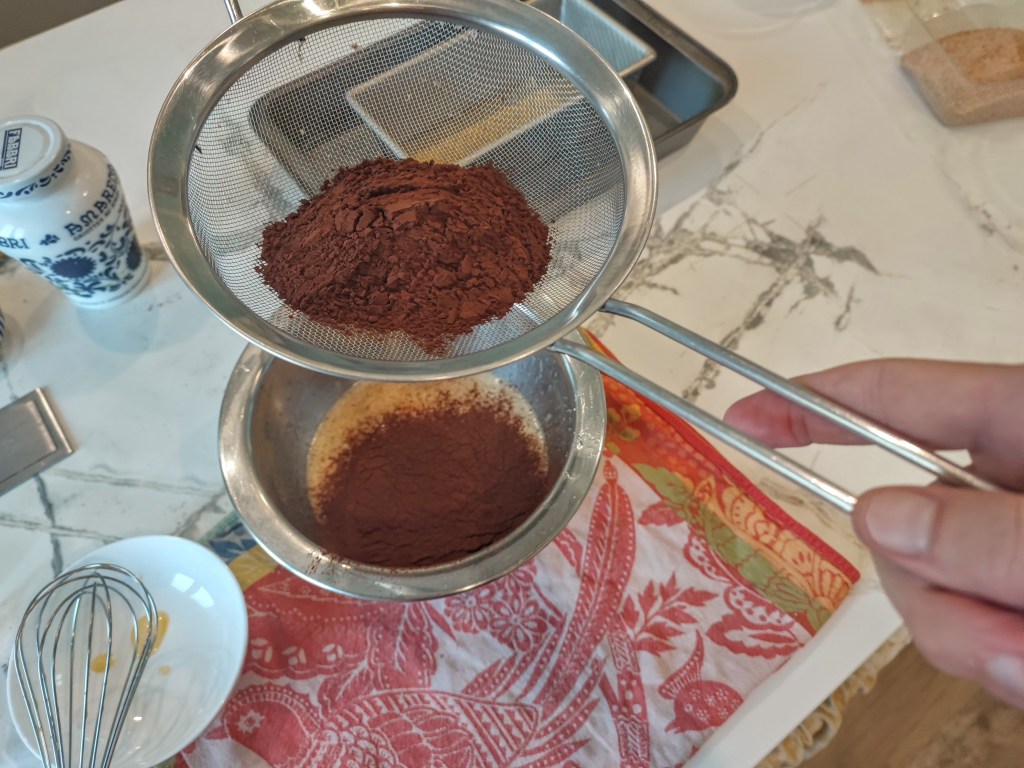
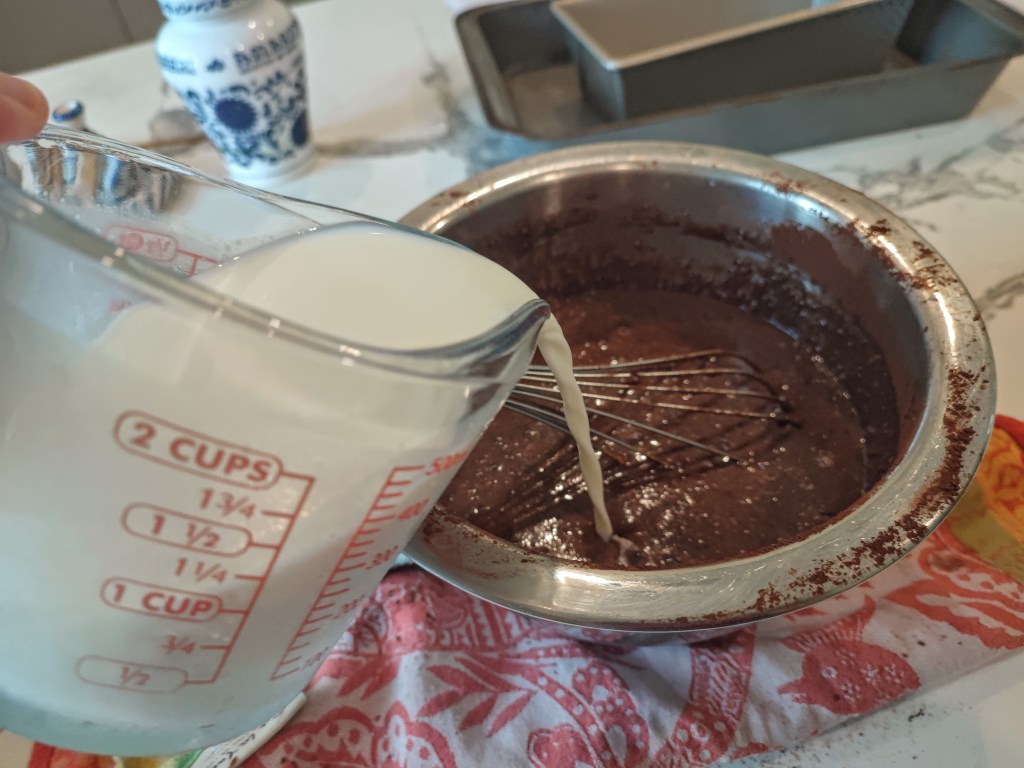
- Sift and add the unsweetened cocoa powder and the salt to the bowl with the sugar and eggs. Whisk thoroughly. Next add the crushed cookies and the liquor (or coffee or vanilla) and whisk. Finally, slowly whisk in the milk
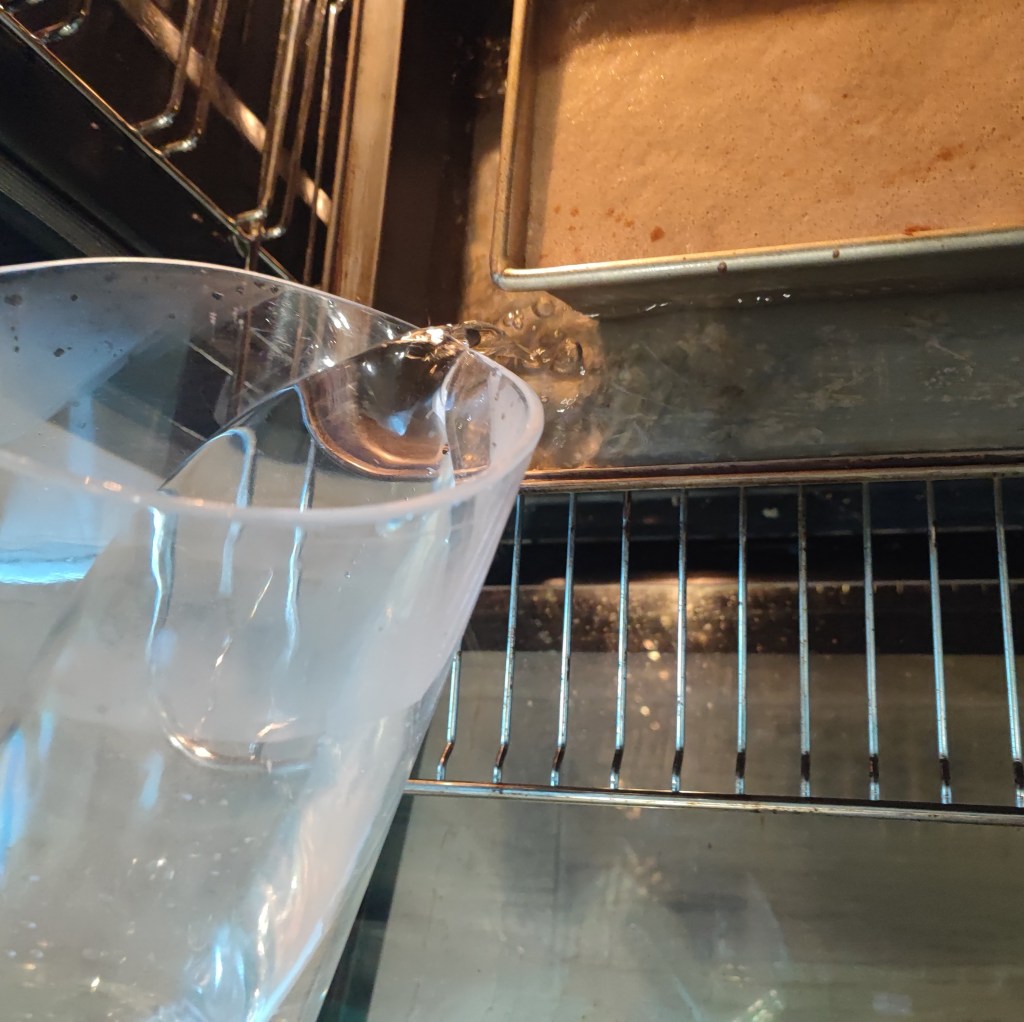
- Slightly tricky part number 1: Place the loaf pan with the caramel into the center of a larger pan (such as a 9 X 13-inch pan (23 X 33 cm). Pour the liquid batter into the loaf pan. Next fill a large pitcher of very hot tap water. Carefully place the pans onto the oven rack. Now fill the larger pan with the hot water, avoiding getting any water into the loaf pan with the batter. You are creating a water bath to surround the loaf pan to help gently cook the Bonet. Use enough hot water to reach up to 3/4 of the outside of the loaf pan. See headnote photos. TIP: Move slowly and cautiously to avoid burning yourself or getting water into the loaf pan
- Bake from 1 hour and 20 minutes to 1 hour and 40 minutes. The time range depends on the size of your loaf pan (mine is 9 X 5 X 2.75 inches (23 X 12.7 X 7 cm). Cover with aluminum foil halfway through. The Bonet is done when an inserted toothpick comes out clean. Remove the loaf pan from the water bath. Cool completely on a cooling rack. Cover and refrigerate for at least 4 hours, or better yet, overnight
- Slightly tricky part number 2: To successfully remove the Bonet from the loaf pan, run a knife or spatula around the perimeter of the Bonet. Next, heat the bottom of the loaf pan over low heat for about a minute to melt the caramel (if need be, place the loaf pan in a large skillet). Place a serving dish on top of the loaf pan and quickly invert the pan and serving dish. Slowly remove the loaf pan from the Bonet and drizzle any remaining caramel over the top of the Bonet. Decorate with the remaining cookies. Slice and serve

 Greg Nelson Cooks
This looks amazing, and I can’t wait to try baking this!
LikeLiked by 1 person
great dessert summary. Thanks!
LikeLiked by 1 person