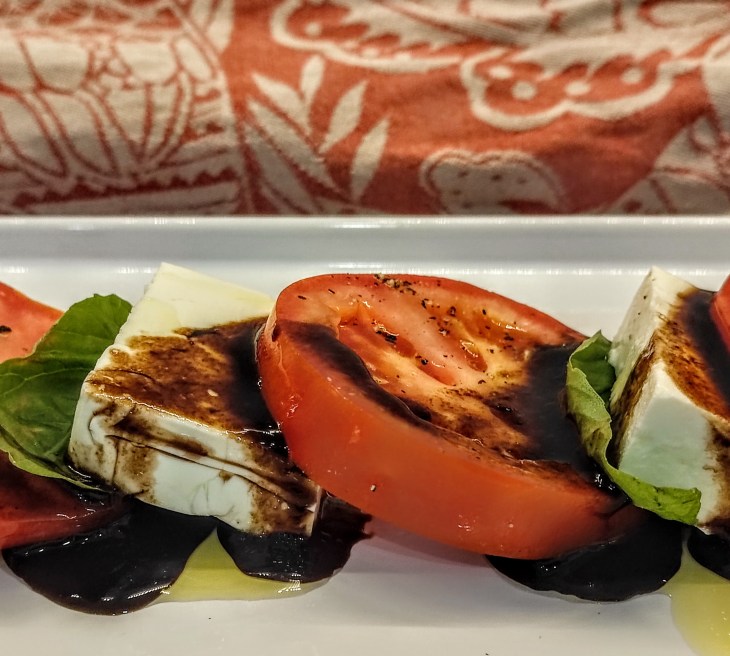
Real, aged balsamic vinegar is expensive. Very expensive. Like $200 – $500 or more for a tiny bottle expensive. Why is it so costly? Balsamic vinegar is made with grape must (pressed grape juice and parts of the grape including the stems, cooked down into a thick syrup). It is then aged from 12-25 or more years in wood barrels until it is thick and syrupy (if a return on investment takes more than 25 years it is easy to understand the high price tag). It was and is originally produced in Modena, Italy, and where you can still participate in tours explaining the process and history.
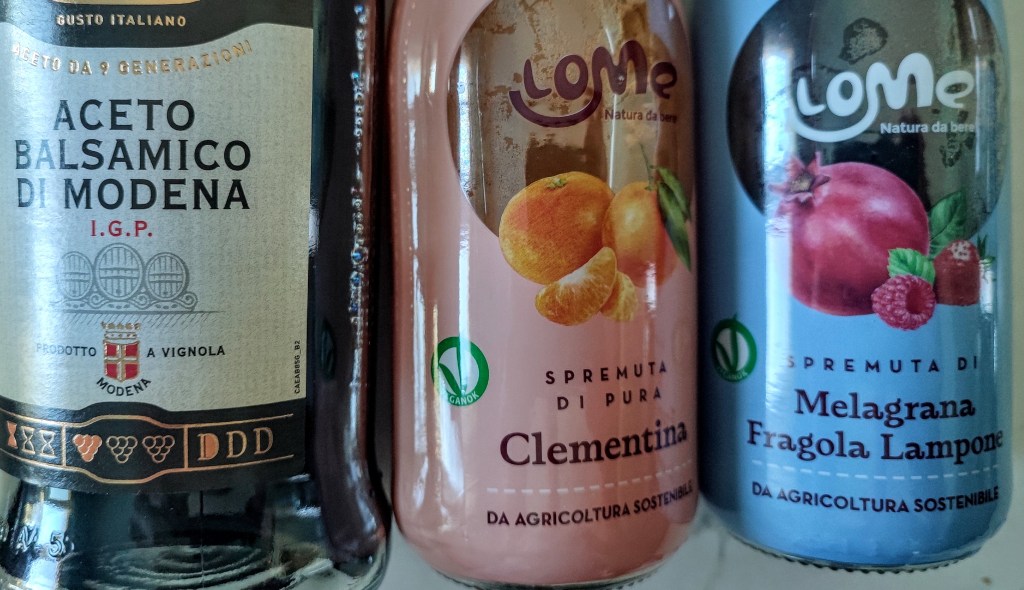
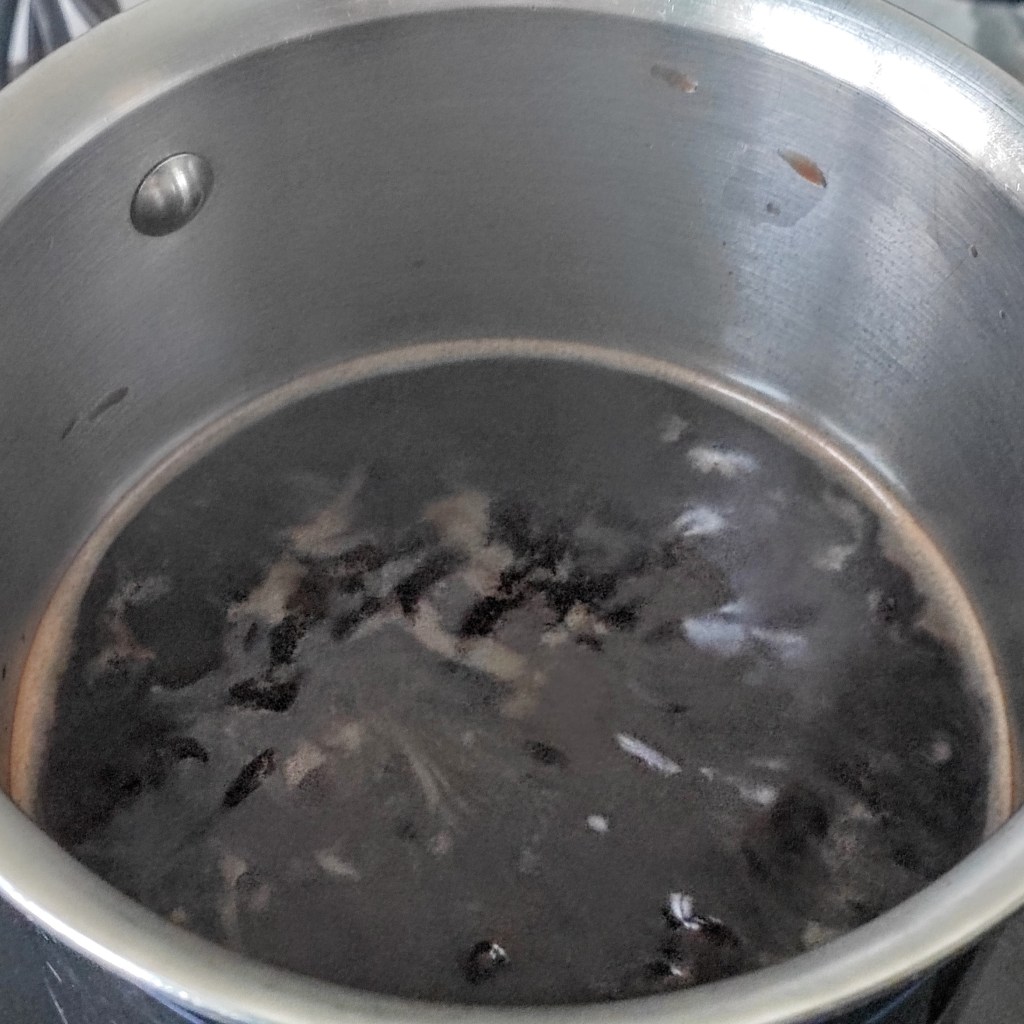
What you typically find at a grocery store under $5 is white wine vinegar with grape must boiled, then aged for a very short period. It’s runny and is not at all complex in flavor. So how do you get closer to the good stuff without robbing a bank or spending a fortune? Simmer it with fruit juice and reduce it by 60-75%. No, it’s not the same, but it will be 100% better than the cheap commercial grocery store bottle under $5. And you can customize using different fruit juices and ratios, depending on how you want to use it (for example: meat, duck, marinades, cheese, salad dressings, and even for desserts). Just change the juice and the proportions and you can flex it any way you need. Oh, and it also makes great, unexpected host gifts.
___________________________
Did you enjoy reading or making the recipe from this post? If so, please consider giving it a “like” or a comment. It would be nice to know you are out there and that my posts connect with you.
Balsamic Syrup
Ingredients
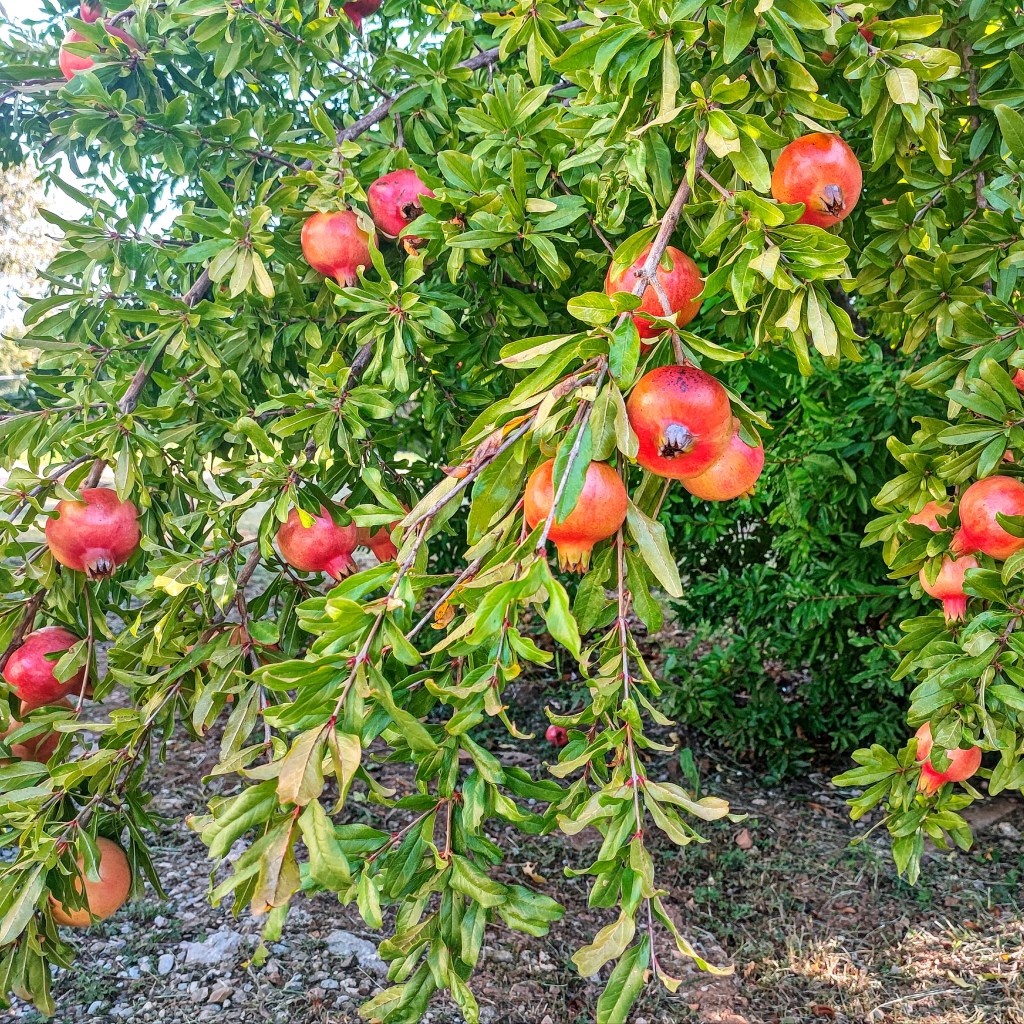
- 1:1 Ratio (Balanced & Versatile): 1 cup (about 250 ml) balsamic vinegar to 1 cup (about 250 ml) fruit juice. Consider the following juice (or a mix of them) pomegranate, dark cherry, blackberry, or blueberry juice
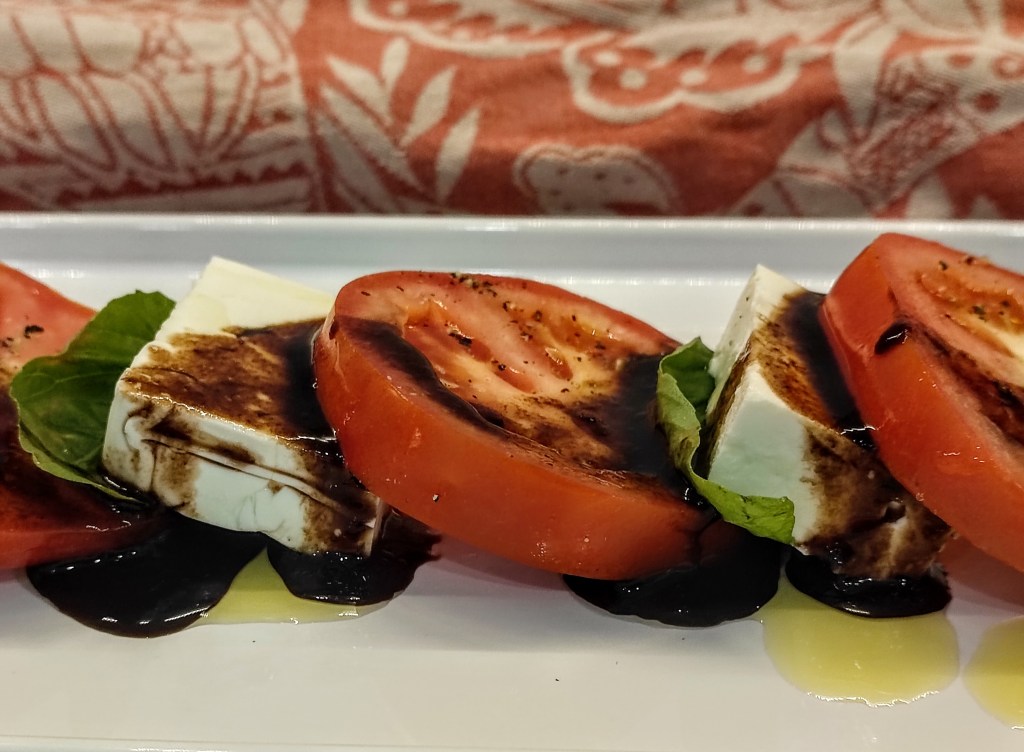
- 2:1 Ratio (Vinegar-Forward and Sharp): 1 cup (about 250 ml) balsamic vinegar to 1/2 cup (about 125 ml) fruit juice. Consider any of the above fruit juices, or even pure cranberry (not cranberry cocktail, which is sugar water) or orange juice. This version is best for a sharper, savory finish for meats or salads
- 1:2 Ratio (Sweet and Dessert-Oriented): 1 cup (about 250 ml) balsamic vinegar to 2 cups (about 500 ml) fruit juice. Ideal for drizzling over fruit, ice cream, or roasted figs or pears
Ratio options by flavor profiles and suggested usage:
Directions
- Combine the liquids in a small saucepan and bring them to a medium simmer over medium-low heat
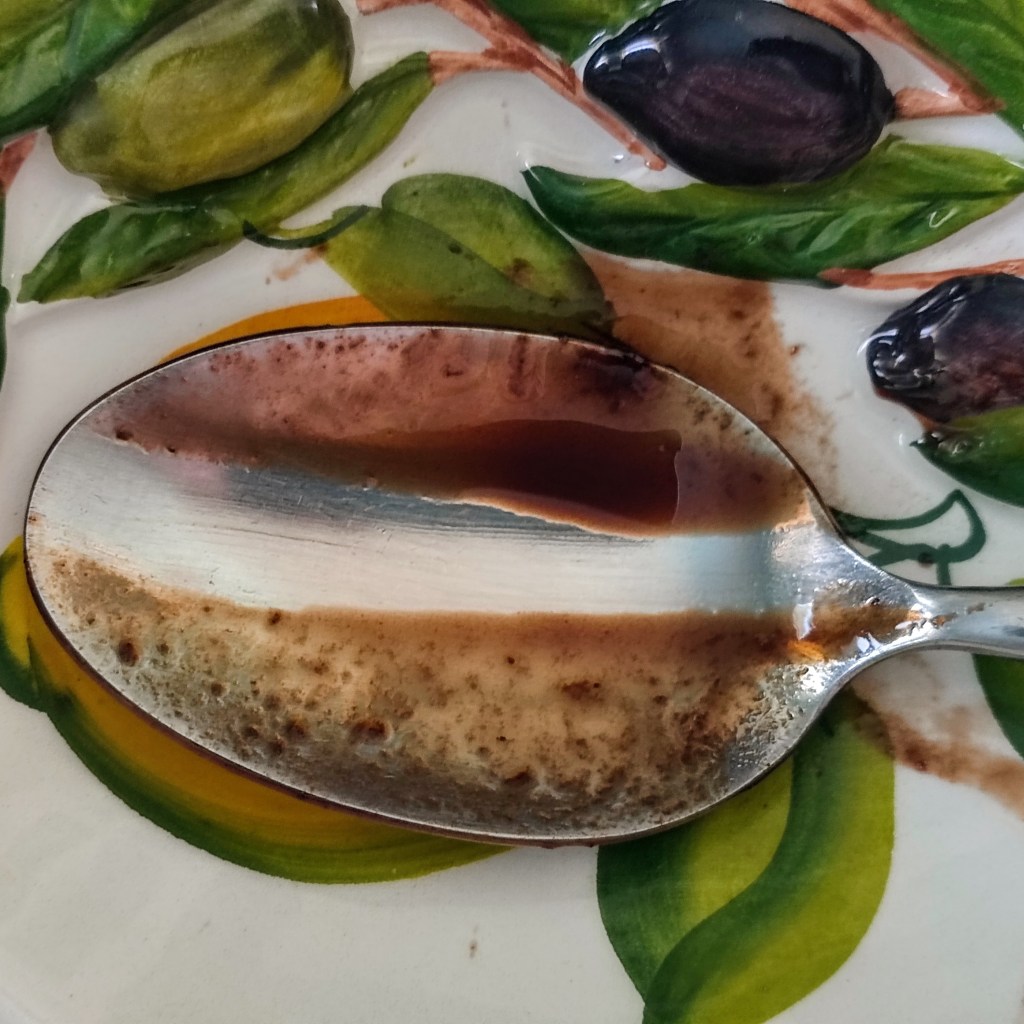
- Simmer uncovered for 45 to 60 minutes until reduced by 60% to 75%, according to your preference. If you want a more syrupy result such as for desserts, then reduce the liquid by 75%, which will take about an hour. (example: I had 750 ml total liquid — 2 parts juice, one part vinegar. To get it to a syrupy state for dessert, it took 60 minutes of simmering, reducing it 75% to 200 ml (3/4 cup) final result.) Pull it off the heat when it heavily coats the back of a spoon (see headnote photo). It will continue to slightly thicken as it cools down to room temperature
- Store the completely cooled balsamic syrup in an airtight glass container in the refrigerator for up to 4 weeks. Alternatively, you can freeze the balsamic syrup in an airtight container or ice cube trays for up to 6 months. If freezing, thaw in the refrigerator overnight and shake or stir well before using.


One thought